Short answer: brand identity design is the work of creating the visual system that makes a business recognisable: its logo, colour palette, typography, imagery style and the rules for using them, collected in a brand guidelines document. A good identity makes everything you publish, from your website to a social post to a pitch deck, look like it came from the same company. It starts with strategy (who you are for and how you want to be seen), not with the logo.
This guide covers what a brand identity includes, how it differs from a brand and a logo, the design process step by step, what you should receive at the end, and how to brief a designer.
Brand, brand identity and logo: what is the difference?
| Term | What it means |
|---|---|
| Brand | What people think and feel about your business. You influence it, but it lives in their heads. |
| Brand identity | The visible and verbal tools you use to shape that impression: logo, colours, type, imagery, tone of voice. |
| Logo | One part of the identity: the mark or wordmark that signs your work. |
A logo on its own rarely makes a business recognisable. Consistent colours, type and imagery across every touchpoint do.
What a brand identity includes
- Logo: a primary logo plus versions for different spaces, such as a horizontal lockup, a stacked version and a small icon for favicons and social profiles.
- Colour palette: primary and secondary colours with exact values for screen (HEX, RGB) and print (CMYK), and guidance on how much of each to use.
- Typography: typefaces for headings and body text, with sizes and weights, plus web-safe fallbacks.
- Iconography and graphic elements: an icon style, patterns or shapes that extend the identity beyond the logo.
- Imagery style: what photos and illustrations should look like, and what to avoid.
- Tone of voice: how the brand writes, with examples of words and phrases that fit and don't.
- Brand guidelines: a document that pulls all of this together, with examples of correct and incorrect use.
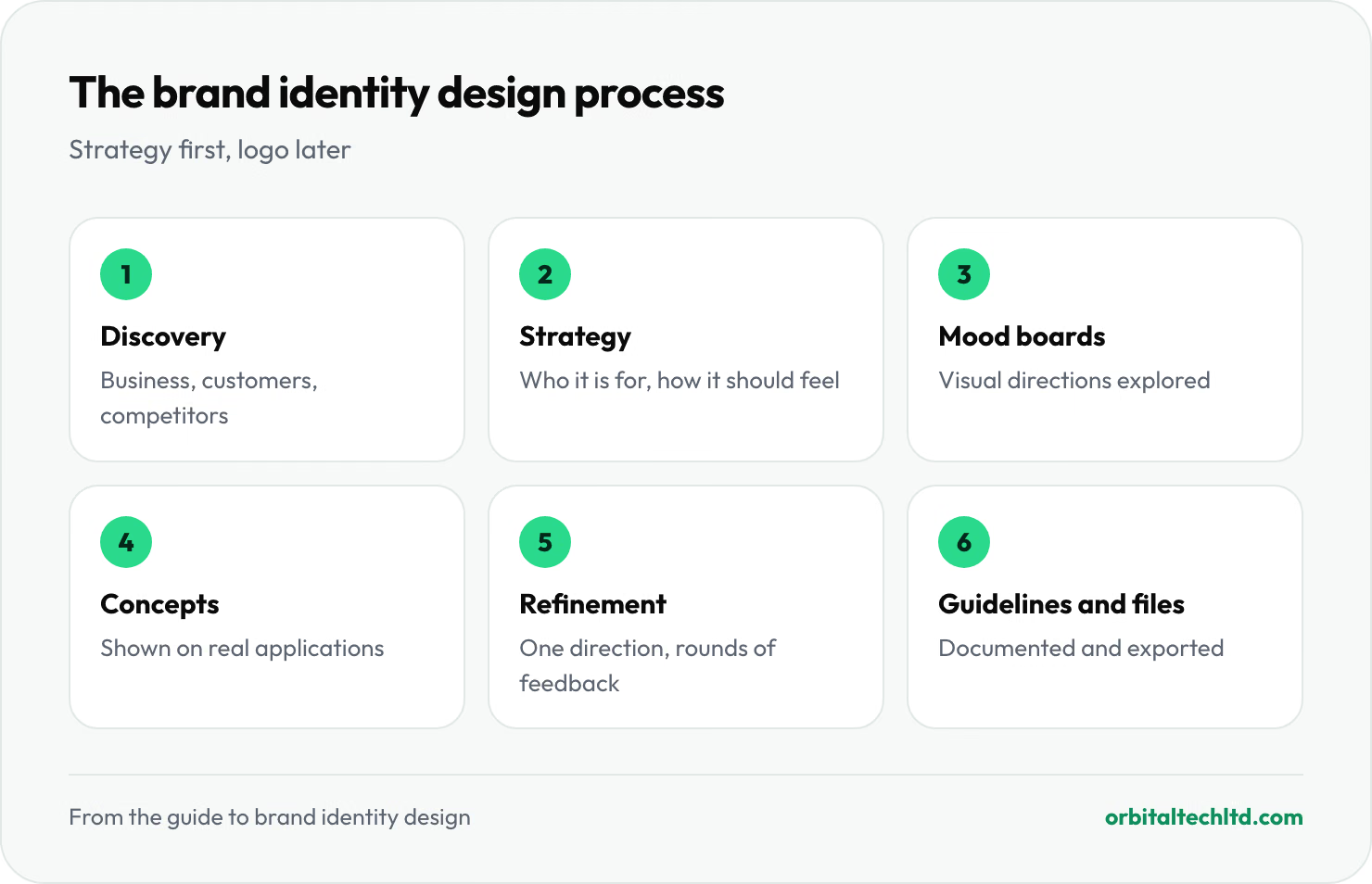
The brand identity design process
- Discovery. The designer learns about the business, its customers, competitors and goals, usually through a questionnaire and a workshop.
- Strategy. The findings become a short brief: who the brand is for, what it stands for, and a few words that describe how it should feel.
- Research and mood boards. Visual directions are explored and tested against the strategy and against what competitors look like.
- Concepts. A small number of identity directions, each showing the logo, colours and type working together on real examples.
- Refinement. One direction is chosen and refined through rounds of feedback.
- Guidelines and files. The final system is documented, and every logo and asset is exported in the formats you need.
Judge concepts on real applications, such as your home page, a social post or packaging, not on a logo floating on a white page. That is where you see whether the identity actually works.
What you should receive at the end
- Logo files in vector formats (SVG, EPS or PDF) for print and scaling, and PNG for everyday use, in full colour, single colour, black and white.
- The brand guidelines as a PDF or web page.
- Colour values for screen and print.
- Font files or licences, or clear instructions on where to get them.
- Starter templates, if agreed, such as social posts, a presentation or business cards.
- Ownership: confirmation in writing that the rights to the final designs pass to you.
How to brief a brand identity designer
A good brief saves rounds of revisions. Cover:
- The business: what you sell, to whom, and what makes you different.
- Your audience: who they are and what they care about.
- Competitors: who you need to stand apart from, with links.
- Personality: three to five words for how the brand should feel, and a few it should not.
- Where it will be used: website, app, packaging, signage, social, print.
- What must stay: anything from your current branding you want to keep, such as a name or colour.
- Budget and timeline.
Common brand identity mistakes
- Starting with the logo before agreeing who the brand is for.
- Following trends that will date the identity within a couple of years.
- Designing for one size. A logo that only works large fails as a favicon or app icon.
- No guidelines, so every new designer or agency interprets the brand differently.
- Too many colours or fonts, which makes consistency hard to keep.
Brand identity design at Orbital
Our graphic design services include brand identity design: a logo, colour palette, typography, iconography and a brand guidelines document. A brand identity is scoped and quoted as a one-off project, and a monthly design plan can then produce everything that follows from it, from social and ad creatives to decks and packaging. When the identity is ready, our web development services can carry it through to your website.