
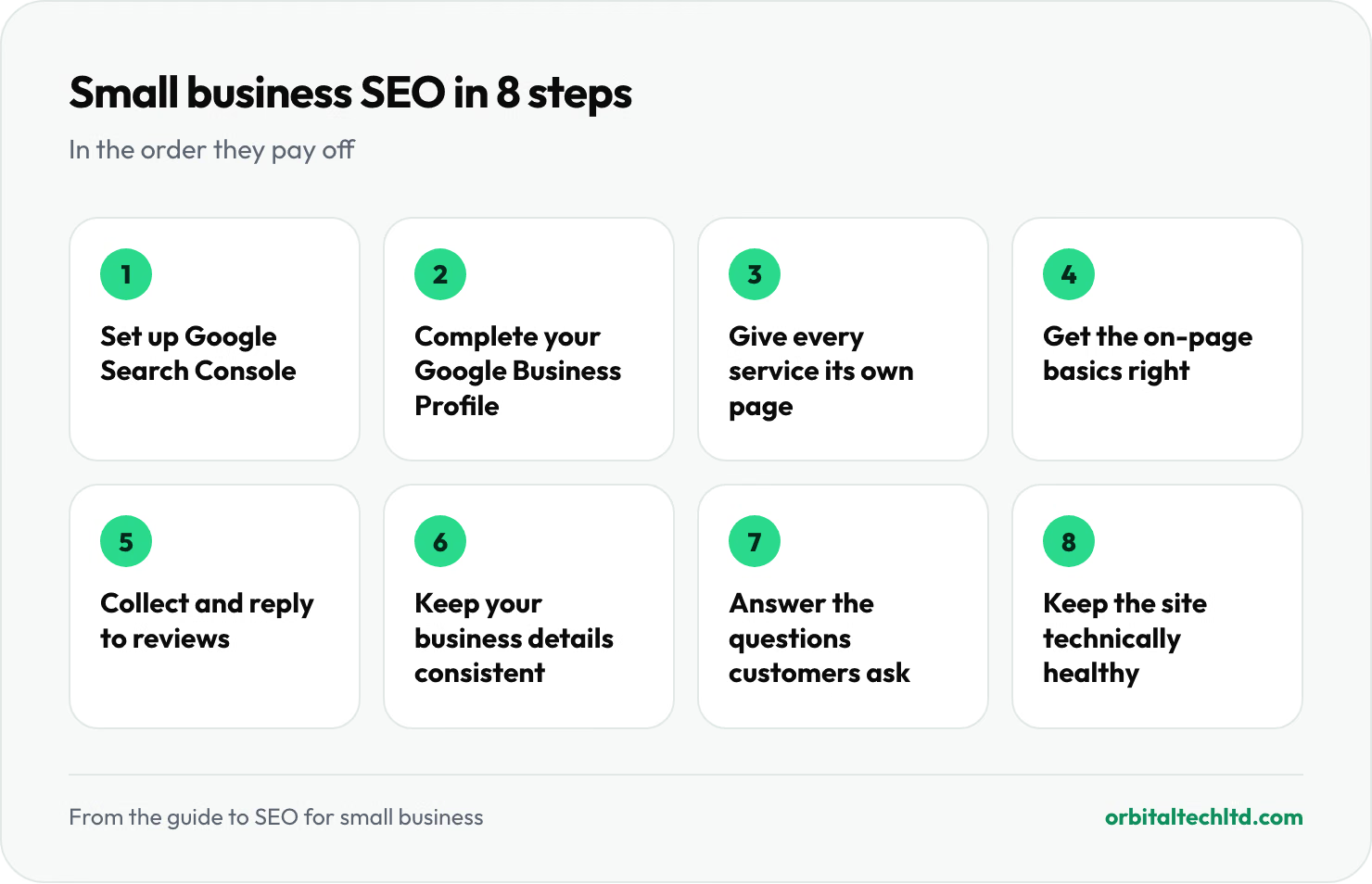
Short answer: SEO for a small business comes down to eight things: set up Google Search Console, complete your Google Business Profile, give every service its own page, get the on-page basics right, collect reviews, keep your business details consistent across the web, answer the questions customers ask, and keep the site technically healthy. Most of it costs nothing but time, and a lot of it you can do yourself.
Small businesses have one big advantage in search: most of their customers are looking for something nearby, so they are competing with a handful of local businesses, not the whole internet. This guide covers what to do, in the order it pays off.
Step 1: Set up Google Search Console
Google Search Console is free and shows you the searches your site appears for, how often people click, and any problems Google has crawling or indexing your pages. Verify your site, submit your sitemap and check the Page indexing report. Every later step is easier to measure once this is in place.
Step 2: Complete your Google Business Profile
For most local businesses, the Google Business Profile is the single most important listing they have. It is what appears in the map results and on the right-hand side of Google when someone searches for your business.
Google says local results are based on three main factors:
- Relevance: how well your profile matches what someone is searching for.
- Distance: how far your business is from the person searching.
- Prominence: how well known your business is.
You cannot change distance, and Google is clear that there is no way to pay for a better local ranking. You can improve relevance and prominence:
- Choose the most accurate primary category, and add secondary categories only where they genuinely apply.
- Fill in every field: services, service areas, hours, holiday hours, phone, website and a clear description of what you do.
- Add real photos of your premises, team and work, and keep adding new ones.
- Post updates and offers, and answer questions people ask on your profile.
See Google's own guidance on local ranking for the detail.
Step 3: Give every service its own page
A single "Services" page listing everything you do is hard to rank for any one of them. A plumber with separate pages for water heater repair, bathroom remodels and emergency call-outs can match each of those searches much more closely.
Each service page should explain what the service is, who it is for, what it costs or what affects the price, the area you cover, and how to book. If you serve several towns, mention them where they are genuinely relevant. Avoid creating near-identical pages for every town with only the name swapped: Google treats those as doorway pages, which go against its spam policies.
Step 4: Get the on-page basics right
Google's SEO Starter Guide covers these, and they apply to every page:
- A unique, descriptive title on every page, naming the service and, for local businesses, the area: "Water Heater Repair in Austin | Smith Plumbing" says far more than "Services".
- A clear heading at the top of the page that says what it is about.
- Readable URLs such as
/water-heater-repair, not/page?id=27. - Descriptive alt text on images, describing what the photo shows.
- Links between related pages, using link text that describes the page you are linking to.
Two things not to bother with: the keywords meta tag, which Google Search does not use, and repeating your main keyword over and over, which reads badly and counts as keyword stuffing.
Step 5: Collect and reply to reviews
According to Google, more reviews and positive ratings can help your local ranking. Reviews also decide whether people choose you once they find you.
- Ask every happy customer, at the moment they are happiest: when the job is done or the order has arrived.
- Make it easy with a direct link to your review form, sent by text or email.
- Reply to every review, good and bad. A calm, helpful reply to a complaint often impresses future customers more than the complaint puts them off.
- Never buy reviews, write your own or offer rewards for positive ones. It breaks Google's policies and can get reviews removed or your profile restricted.
Step 6: Keep your business details consistent
Your business name, address and phone number should be identical everywhere they appear: your website, Google Business Profile, social profiles and directories. Inconsistent details make it harder for search engines to be confident they are all the same business.
Then earn mentions that build prominence: local directories relevant to your trade, your chamber of commerce, suppliers and partners who list their customers, local news coverage and sponsorships. A few genuine local mentions are worth more than hundreds of low-quality directory listings.
Step 7: Answer the questions your customers ask
Write down the questions you hear every week, such as how much something costs, how long it takes, or whether you work weekends, and answer them on your site. A clear pricing page or a good FAQ section can rank for searches your competitors ignore, and it saves you time on the phone.
You do not need to blog every week. A handful of genuinely useful pages, kept up to date, beats a stream of thin posts written to fill a schedule.
Step 8: Keep the site technically healthy
Your site needs to load quickly on a phone, work on every screen size, run on HTTPS and let Google index the pages that matter. If you are not sure where you stand, our technical SEO audit checklist walks through the checks in order. Most small business sites only need a handful of fixes. If the site itself is the problem, a rebuild by a web development team that builds SEO in from launch can be quicker than patching it.
How to measure whether it is working
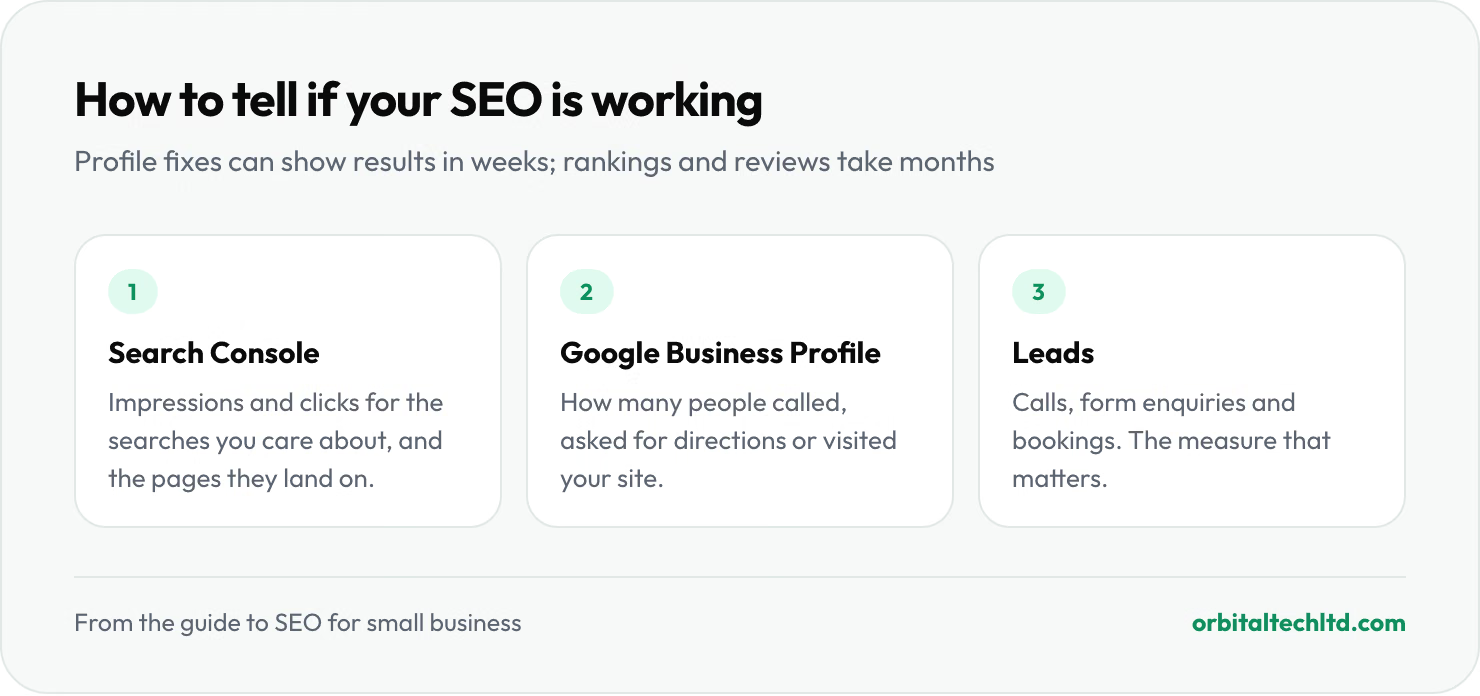
- Search Console: impressions and clicks for the searches you care about, and which pages they land on.
- Google Business Profile performance: how many people called, asked for directions or visited your site from your profile.
- Leads: calls, form enquiries and bookings. Ask new customers how they found you. It is the measure that matters.
Give it time. Profile and on-page fixes can show results within weeks, but building rankings and reviews usually takes several months.
Can I do my own SEO for my business?
Yes. Steps 1 to 7 need no technical skill, just a few hours to set up and an hour or two a week to keep going: replying to reviews, posting updates and improving a page now and then. Many small businesses get most of the benefit this way.
Help is worth paying for when you are in a competitive market, your site has technical problems you cannot fix, or the time simply is not there. Our guide to how much SEO costs covers what small businesses typically pay and what each budget buys.
Is SEO worth it for a small business?
For most, yes, because customers search before they buy and the basics cost little more than time. The exceptions are businesses where customers never search, such as those that run entirely on referrals from a few partners, or where you need leads this week, in which case paid ads are the faster tool. The best test is to look at what people search for in your area and whether your competitors are getting found for it.
Small business SEO at Orbital
If you would rather hand it over, our monthly plans start at $1,200 with SEO as your one service. We run a technical audit first, our developers ship the fixes, and we report on rankings, traffic and revenue every month. See our technical SEO services for what is included.