Short answer: a 3PL, or third-party logistics provider, is a company that stores, packs and ships products on behalf of other businesses. Instead of running your own warehouse, you send your stock to the 3PL. When a customer orders, the 3PL picks the items, packs them and hands them to a carrier, and you pay for the storage and each order handled. The name comes from the parties involved: you are the first party, your customer the second, and the logistics company the third.
This guide explains what a 3PL does, how it differs from 1PL, 2PL and 4PL, how 3PL pricing works, when using one makes sense, and what to ask before you sign. If you run a 3PL yourself, the last section covers the software side.
What a 3PL does
Most 3PLs offer some or all of these services, usually priced separately:
- Receiving: unloading your inbound stock, checking it against what was ordered, and putting it away in the warehouse.
- Storage: keeping your products on pallets, shelves or bins, often with stock levels you can see online.
- Pick and pack: collecting the items for each order, packing them and labelling the parcel.
- Shipping: handing parcels to carriers, often at discounted rates the 3PL has negotiated across all its clients.
- Returns: receiving returned items, inspecting them and putting saleable stock back on the shelf.
- Value-added services: kitting and bundling, labelling, gift wrapping, or consolidating shipments from several suppliers.
- Integrations: connecting to your online store or marketplace, so orders flow to the warehouse automatically and tracking numbers flow back.
How 3PL fulfillment works, step by step
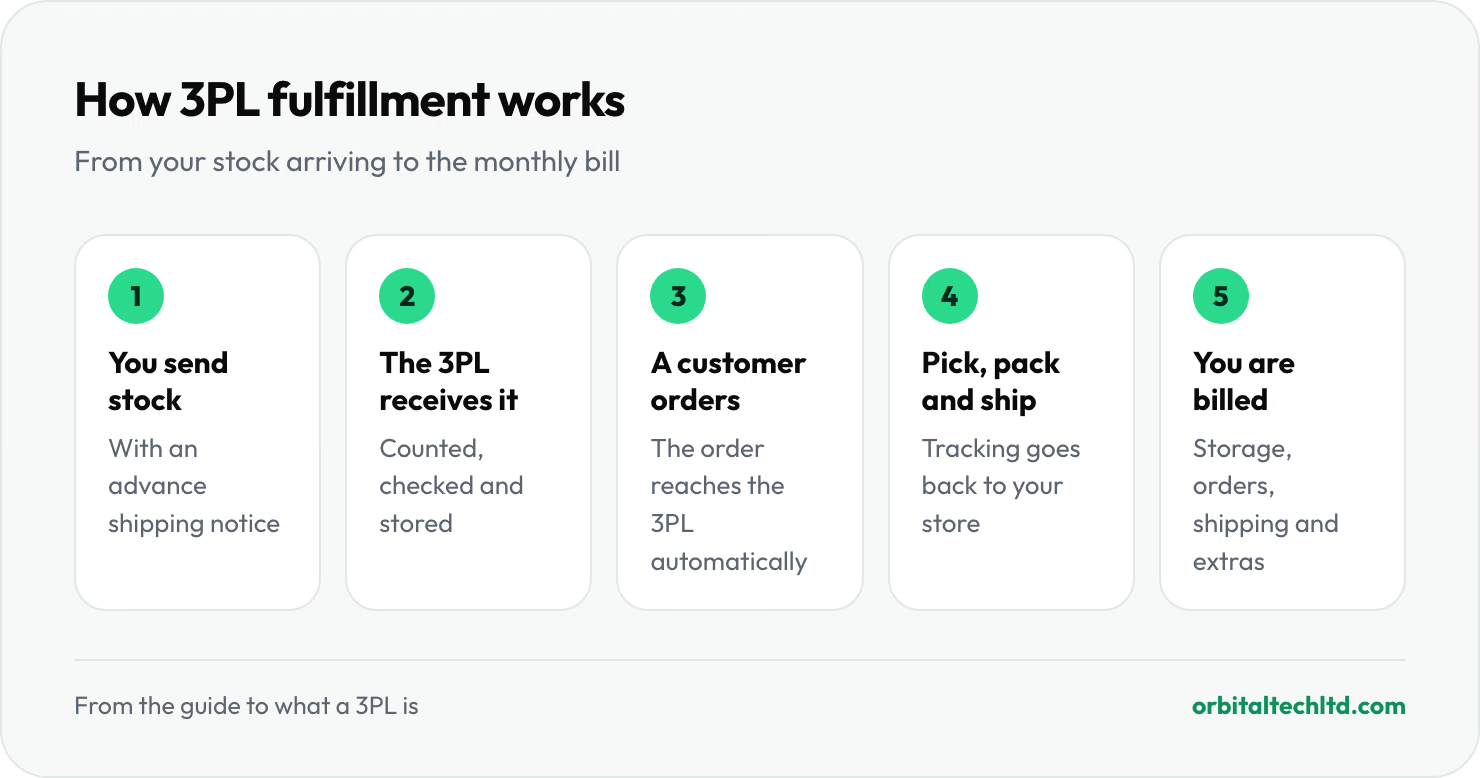
- You send stock to the 3PL, usually with an advance shipping notice that lists what is coming.
- The 3PL receives it and counts it, checks its condition and stores it in a known location.
- A customer places an order on your store or marketplace, and it passes to the 3PL's system automatically.
- The 3PL picks, packs and ships it, and the tracking number goes back to your store and your customer.
- You are billed for storage, each order handled, shipping and any extras, usually monthly.
1PL, 2PL, 3PL and 4PL: what is the difference?
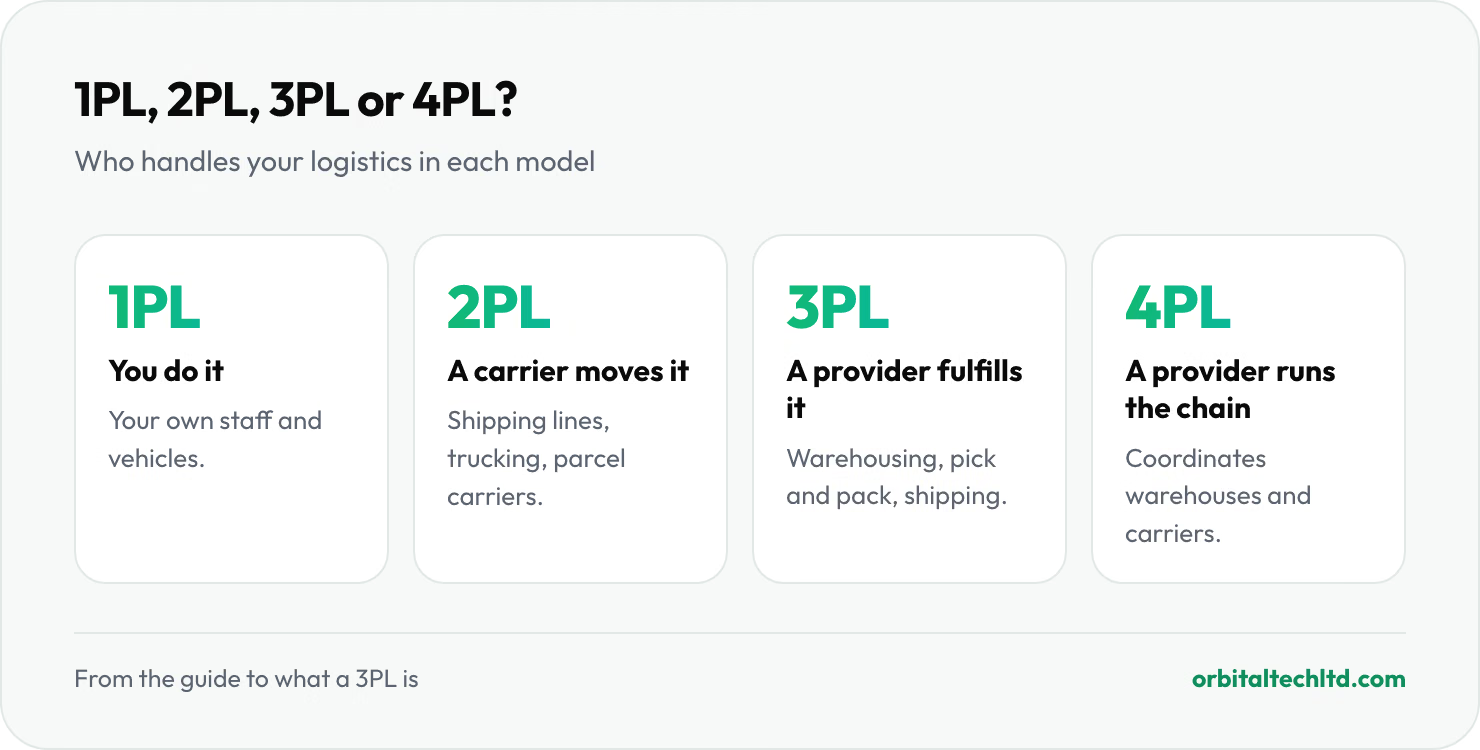
| Model | Who handles logistics | Typical example |
|---|---|---|
| 1PL | You, with your own staff and vehicles | A business delivering its own goods |
| 2PL | A carrier you hire to move goods | A shipping line, trucking company or parcel carrier |
| 3PL | A provider that runs warehousing and fulfillment for you | A fulfillment center storing and shipping your orders |
| 4PL | A provider that manages your whole supply chain, including other 3PLs and carriers | A lead logistics partner coordinating several warehouses |
Most small and mid-sized brands that outsource logistics are looking for a 3PL. A 4PL makes sense when the supply chain is large enough that coordinating several warehouses and carriers is itself a full-time job.
How 3PL pricing works
3PLs rarely quote a single price, because their costs depend on how much space your products take and how many orders you ship. Expect a quote with lines like these:
| Fee | What it covers | Usually charged |
|---|---|---|
| Setup or onboarding | Account setup, integrations and the first stock intake | Once |
| Receiving | Unloading, counting and putting away inbound stock | Per pallet, carton or hour |
| Storage | The space your products use | Per pallet, shelf, bin or cubic foot, monthly |
| Pick and pack | Collecting and packing each order | Per order, plus per extra item |
| Packaging | Boxes, mailers and fill | Per package, or bring your own |
| Shipping | The carrier's charge for delivery | Per parcel, at the 3PL's rates |
| Returns | Receiving and restocking returned items | Per return |
| Account minimum | A floor on your monthly bill | Monthly |
Rates vary widely by region, product size and volume, so compare quotes on the same basis: take last month's real orders and stock, price them with each 3PL's rate card, and compare the totals rather than the headline storage or pick fee.
When should you use a 3PL?
A 3PL usually makes sense when:
- Packing orders is taking over your week, and that time would be better spent on product or sales.
- You are outgrowing your space, but a warehouse lease, racking and staff would cost more than outsourcing.
- You want faster delivery to customers in another region, which a 3PL with warehouses there can offer.
- Your volumes swing with the seasons, and you would rather pay per order than staff for the peak.
Keeping fulfillment in-house can still be the better call when your products are unusual to handle, your margins depend on custom packing, or your volumes are small enough that a 3PL's minimums would cost more than doing it yourself.
How to choose a 3PL
- Does it integrate with your store? Ask which platforms and marketplaces connect directly, and how orders and stock levels sync.
- Can you see your stock in real time? A client portal with live inventory and order status saves a lot of emails.
- Where are its warehouses? Distance to your customers drives shipping cost and delivery time.
- What is its accuracy? Ask how it measures picking accuracy and what happens when an order goes out wrong.
- What does the full bill look like? Ask for a sample invoice using your own volumes, including minimums and extras.
- How easy is it to leave? Check the notice period and how your stock is returned if you move.
Running a 3PL? The software matters
For the 3PL itself, the hard part is often not the warehouse floor but the paperwork around it: billing each client correctly for storage and handling, keeping every client's stock separate, and giving clients a portal so they stop emailing for updates. That is the job of a warehouse management system built for 3PLs.
Spiffy, our warehouse management system, is built for 3PLs, freight forwarders and brands: scan-based intake, storage billing, consolidation, multi-carrier shipping and client portals, with each client's data kept separate. If your logistics business needs something more tailored, see our work for the logistics and fulfillment industry.