
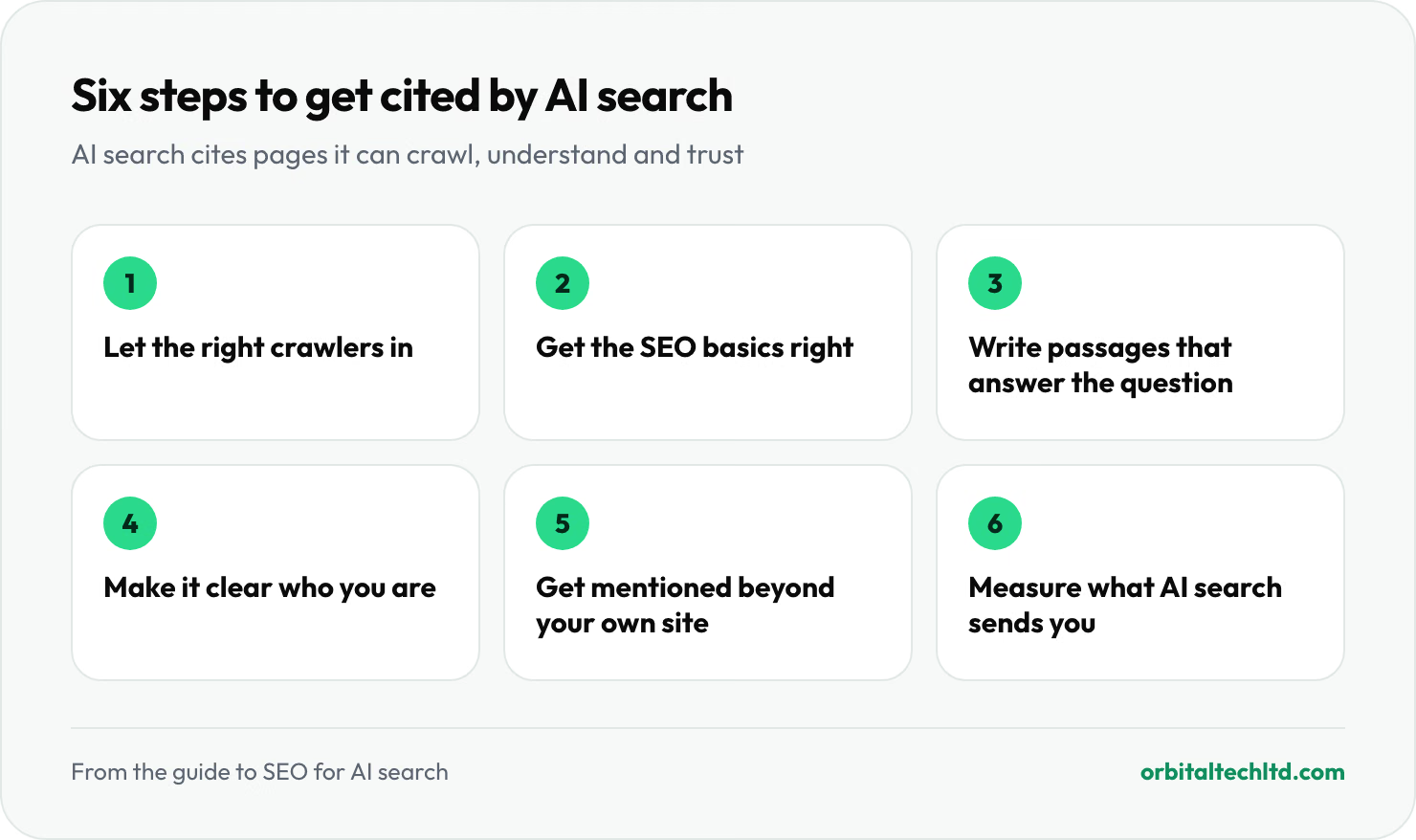
Short answer: AI search tools such as Google's AI Overviews, ChatGPT search and Perplexity cite pages they can crawl, understand and trust. Getting cited comes down to five things: letting the right crawlers in, getting the SEO basics right, writing passages that answer questions directly, making it clear who you are, and being mentioned on other sites people trust.
There is no secret format. Google says it plainly in its guidance for site owners: "There are no additional requirements to appear in AI Overviews or AI Mode." A page needs to be indexed and eligible to show a snippet in normal search, and the same fundamentals that help it rank help it get cited. What changes is how much structure and clarity pays off.
How AI search chooses its sources
Each tool works differently, but the pattern is broadly the same. The tool searches an index of web pages, pulls the passages that best answer the question, writes a summary, and links to some of the pages it used. Two things follow from that:
- If a page is not in the index, it cannot be cited. Crawl access and indexing matter as much as they ever did.
- Passages are judged, not just pages. A clear, self-contained paragraph that answers the question is easier to lift and cite than a good answer buried halfway through a long section.
Sources are not only brand websites. When we checked the US results for "how much does SEO cost" in October 2026, Google's AI Overview linked to a Reddit discussion alongside Forbes and several agency guides. Forums, reviews and press coverage feed these answers too.
Step 1: Let the right crawlers in
Each AI search tool uses its own crawler, and robots.txt controls them separately. Several companies run one crawler for search and another for training their models, so you can appear in AI search results without letting your content be used for training.
| Crawler | Company | What it does |
|---|---|---|
| Googlebot | Normal Google Search crawling. AI Overviews and AI Mode draw on the same index, so blocking Googlebot removes you from both. | |
| Google-Extended | Controls use of your content for training and grounding in some of Google's other AI products. It is not the control for AI Overviews. | |
| OAI-SearchBot | OpenAI | Surfaces sites in ChatGPT search. OpenAI says sites that block it will not be shown in ChatGPT search answers. |
| GPTBot | OpenAI | Collects content that may be used to train OpenAI's models. Blocking it does not affect ChatGPT search. |
| PerplexityBot | Perplexity | Surfaces and links sites in Perplexity's answers. Perplexity says it is not used to train AI models. |
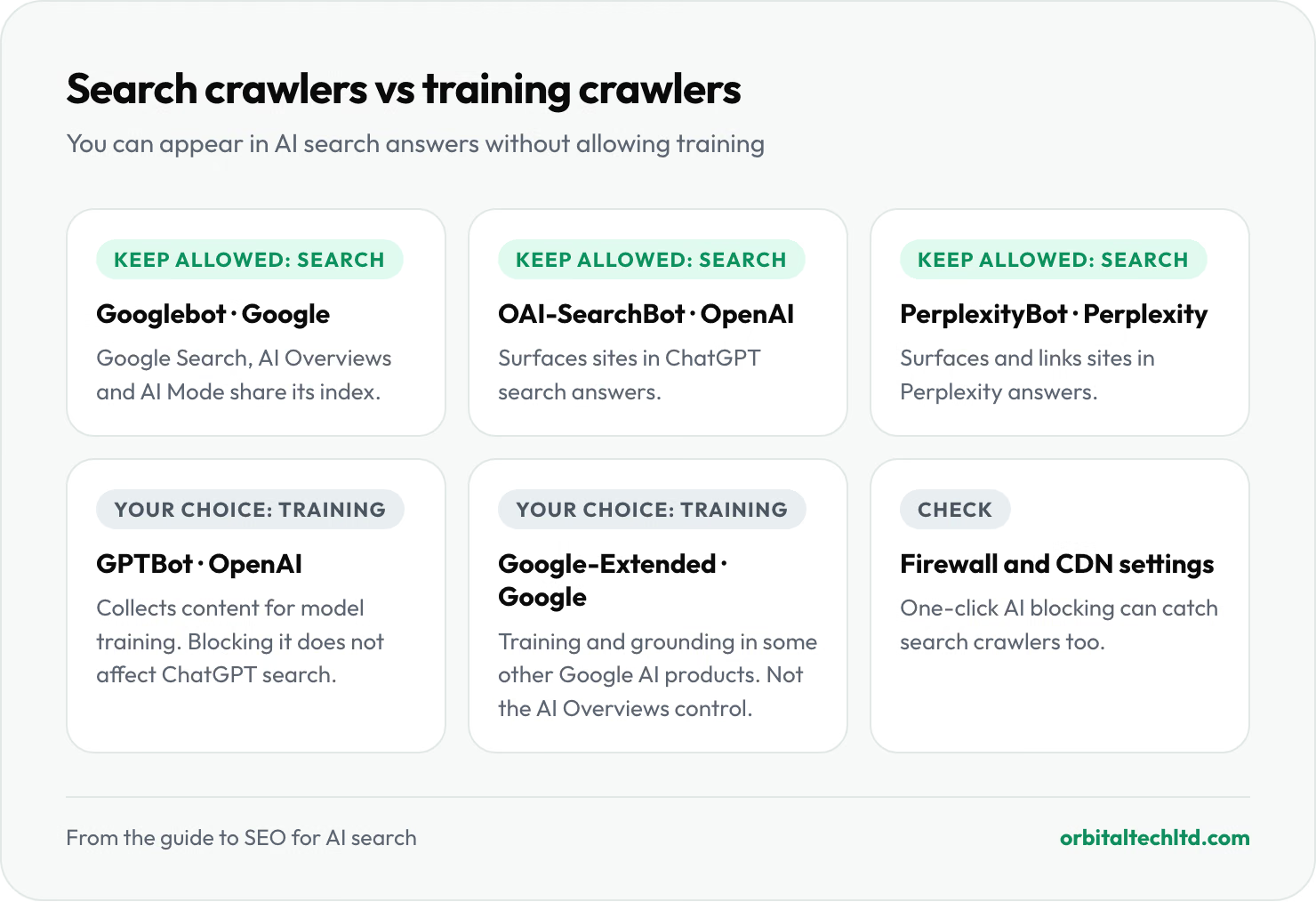
Check your robots.txt, and also any firewall, CDN or bot-protection setting. Some CDNs and hosting providers offer one-click AI crawler blocking, and a broad block can catch search crawlers as well as training ones, taking you out of ChatGPT and Perplexity without anyone on your team noticing.
Step 2: Get the SEO basics right
Google's list of best practices for AI features reads like a standard technical SEO checklist: allow crawling, make content findable through internal links, provide a good page experience, keep important content in text rather than images, and make sure structured data matches what is on the page.
If you have not checked these in a while, our technical SEO audit checklist walks through all 35 checks in order. Fixing indexing problems and slow pages helps your rankings and your AI visibility at the same time.
Step 3: Write passages that answer the question
This is where most sites can gain the most. Write so that any section could be quoted on its own and still make sense:
- Answer first. Open the page, and each main section, with a one or two sentence answer. Explain and qualify after that.
- Use the question as the heading. "How much does a website cost?" is easier to match to a question than "Our approach to investment".
- Be specific. Numbers, prices, timeframes and named examples are easier to cite than general claims. Say where each number comes from.
- Keep the subject in the sentence. "Core Web Vitals measure loading speed, responsiveness and layout stability" can be quoted alone. "They measure three things" cannot, because "they" means nothing out of context.
- Use lists and tables for comparisons. Structured comparisons are easy to extract and easy to read.
None of this is writing for robots. Busy readers want the same thing: the answer up front, in plain language, with the detail underneath.
Step 4: Make it clear who you are
AI tools try to recognise the businesses and people behind a page, and they are more likely to trust a source they can place. Make yours easy to place:
- Use the same business name, description and contact details everywhere: your site, your Google Business Profile, directories and social profiles.
- Have a proper About page that says what you do, for whom, and where.
- Show who wrote an article and why they know the subject.
- Add Organization structured data to your home page. Google says no special schema is needed for AI features, but structured data that matches your visible content makes the basic facts unambiguous.
Step 5: Get mentioned beyond your own site
Because AI answers draw on forums, reviews, comparison articles and news, what other people say about you matters. Being named in an industry roundup or a well-regarded comparison can get your business into an answer even when your own page is not the one cited.
Practical ways to earn those mentions: keep review profiles active and respond to reviews, contribute useful answers in the communities your customers use, publish original data others want to reference, and pitch expert comment to industry publications. This overlaps heavily with good link building, which is why it belongs in a normal SEO program rather than a separate "AI" budget.
Step 6: Measure what AI search sends you
- Google Search Console: Google reports traffic from AI Overviews and AI Mode in the Performance report, inside the normal "Web" search type. It is not broken out separately, so watch your overall clicks and impressions for the pages you are improving.
- Your analytics: look for referral traffic from
chatgpt.com,perplexity.aiand other AI tools. It is usually small today, but worth tracking as it grows. - Spot checks: ask the tools the questions your customers ask, and note who gets cited. Repeat monthly, since answers change.
What not to bother with
- Special AI files and markup. Google says you do not need new machine-readable files or AI text files to appear in its AI features. An
llms.txtfile will not get you into AI Overviews. - Mass-produced AI content. Publishing hundreds of thin pages to cover every question goes against Google's spam policies on scaled content, and thin pages rarely make good sources anyway.
- Chasing every tool separately. The same work, crawlable pages with clear answers from a recognisable business, helps across all of them.
Is SEO dead because of AI search?
No. AI search tools still find their sources by searching the web, so the pages that rank and are clearly written are the ones that get cited. What has changed is that some simple questions are now answered without a click, so it pays to target questions where people want detail, comparison or a provider, and to measure leads rather than just traffic.
Our technical SEO services cover all six steps above as part of one program, and our guide to how much SEO costs explains what that kind of program typically runs.